

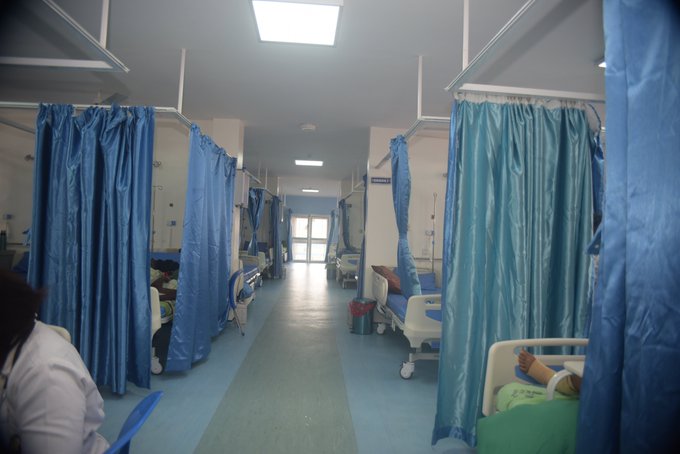
The Guild of Medical Directors has called for stronger infection prevention and control measures in healthcare facilities after an assessment of 415 facilities in Lagos found that 48.8 per cent had inadequate infection prevention and control systems.
The Guild warned that weak infection prevention could contribute to healthcare-associated infections, antimicrobial resistance and the spread of infectious diseases, urging medical directors to make IPC a core part of healthcare delivery.
The call was made at the GMD Scientific Conference and Annual General Meeting held on Friday at Oriental Hotel, Victoria Island, Lagos, where healthcare professionals examined infection prevention, disease surveillance and preparedness for emerging and re-emerging diseases.
While speaking on “Infection Prevention and Control: The Role of Healthcare Services,” Dr Olayemi Daudu said infection prevention should be treated as a standard of care driven by healthcare leadership rather than the responsibility of a single department.
“Infection prevention is not a department or a department of activity, but a standard of care that is driven by governance, and we as directors are charged with that responsibility,” Daudu said.
She disclosed that the assessment of 415 healthcare facilities in Lagos, using the World Health Organisation Infection Prevention and Control Assessment Framework, found that 48.8 per cent had inadequate IPC systems.
Daudu noted that private facilities performed better than public facilities in the assessment, but none of those assessed reached the advanced level.
She explained that effective infection prevention could reduce avoidable infections, antibiotic use, hospital stays and related costs, as healthcare-associated infections and antimicrobial resistance continued to put pressure on health systems.
“The hospital without an infection prevention and control system becomes an amplifier,” she warned.
To address the gaps, Daudu proposed a 90-day IPC compact for GMD member hospitals, including facility assessments, regular audits, stronger laboratory links, improved hand hygiene, surgical-site infection surveillance, facility antibiograms and outbreak-readiness measures such as triage and designated isolation areas.
