

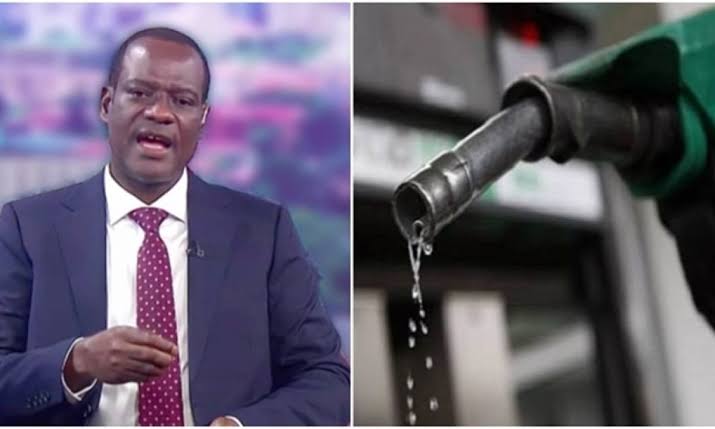
The recent revelation by the Minister of Finance and Coordinating Minister of the Economy, Taiwo Oyedele that the Federal Government plans to introduce a fuel tax in Nigeria has stirred controversy.
Nigerians are describing it as callous and insensitive to their suffering.
Although the minister clarified that the tax would only be imposed when the Federal Government was satisfied that the economy had stabilised and Nigerians’ incomes had improved sufficiently to accommodate the additional cost, Nigerians have rejected his explanation, with many describing it as another ploy to deceive them and inflict more pain on them.
Oyedele had, during an interview on the sidelines of the 2026 International Monetary Fund and World Bank annual meetings in Bangkok, Thailand, disclosed that the Federal Government would introduce a fuel tax when the economy stabilised and Nigerians’ incomes improved sufficiently to accommodate the additional cost.
He said revenue from the levy would support road infrastructure and the development of a fuel reserve to cushion the effects of future price shocks, stressing that its implementation would require a ministerial order published in the Official Gazette.
His comments came against the backdrop of previous resistance by organised labour and business groups to the five per cent surcharge on chargeable fossil fuel products provided for in Nigeria’s tax framework. Its commencement remains subject to an order by the finance minister.
He said introducing the tax while petrol was subsidised would have been counterproductive because the government would effectively have paid the charge itself. Imposing it immediately after the removal of the subsidy, he added, would have placed additional pressure on Nigerians.
“The objective should be that instead of trying to suppress prices, which hasn’t worked for us or for any country in the world, not one, and instead of trying to suppress prices, we should think about how to grow income faster than prices rise.
“That’s how you bring prosperity and grow the middle class, and that is exactly what we are doing, as led by Mr President himself.
“At the appropriate time, when the economy is stabilised and income levels are able to accommodate it, those taxes will come. Not because we want to impose taxes,” Oyedele said.
This latest development has reopened old wounds over the removal of the fuel subsidy, as Nigerians, particularly those who run their businesses on generators, have expressed anger and frustration with the All Progressives Congress, APC-led government and its policies.
Explaining the proposed use of the revenue, Oyedele said the fuel reserve would “help moderate prices of fuel products if anything happens.”
He added that the government could temporarily waive the tax during future price shocks to ease pressure on consumers.
“The good thing is that the law says that tax cannot come into effect until there is a gazette. There has to be an order published in the gazette by the finance minister, which means we can’t do it in secret. Plus, we have no intention of doing stuff in secret.
“At the appropriate time, it will be clear to everyone why it needed to be done, and the benefits will be clear also to every Nigerian,” he said.
The existing surcharge framework exempts household kerosene, cooking gas, compressed natural gas and clean or renewable energy products.
As recently as June 16, 2026, the government dismissed reports that it was introducing fresh taxes on petroleum products following recommendations in the IMF’s Article IV consultation report. It said the VAT waiver on petroleum products remained in place and that no process to activate the fuel surcharge was then under consideration.
Comparing Nigeria’s position with that of other countries, Oyedele said taxes accounted for between 20 and 80 per cent of pump prices in some jurisdictions, while several African countries imposed between six and 10 different charges on petroleum products.
He also explained the sequencing of the petrol subsidy removal and foreign exchange reforms, saying the government initially removed support for petrol prices before allowing the naira to adjust gradually.
According to him, exchange-rate movements significantly influenced petrol prices, requiring the government to manage the transition while considering its impact on Nigerians.
“That is the reason why there was still a bit of subsidy in 2023. It was to manage that process because you need to be mindful of the impact on the people.”
Oyedele said the petrol subsidy was completely removed in October 2023, when government support for both petrol prices and foreign exchange was no longer in place.
However, fuel pricing has remained a contentious issue since President Bola Tinubu declared that “fuel subsidy is gone” during his inaugural address on May 29, 2023.
With the proposed fuel tax looming, Nigerians are saying that the government should be considering measures to cushion the harsh effects of the subsidy removal rather than inflicting more hardship on the people.
A tailor, Niyi Osundare, argued that another levy would deepen the hardship faced by citizens already struggling with the removal of the subsidy, rising living costs and naira depreciation.
